
Jun 19, 2026 · CloudMount editorial
AI Compliance: Nobody likes it but CloudMount cares
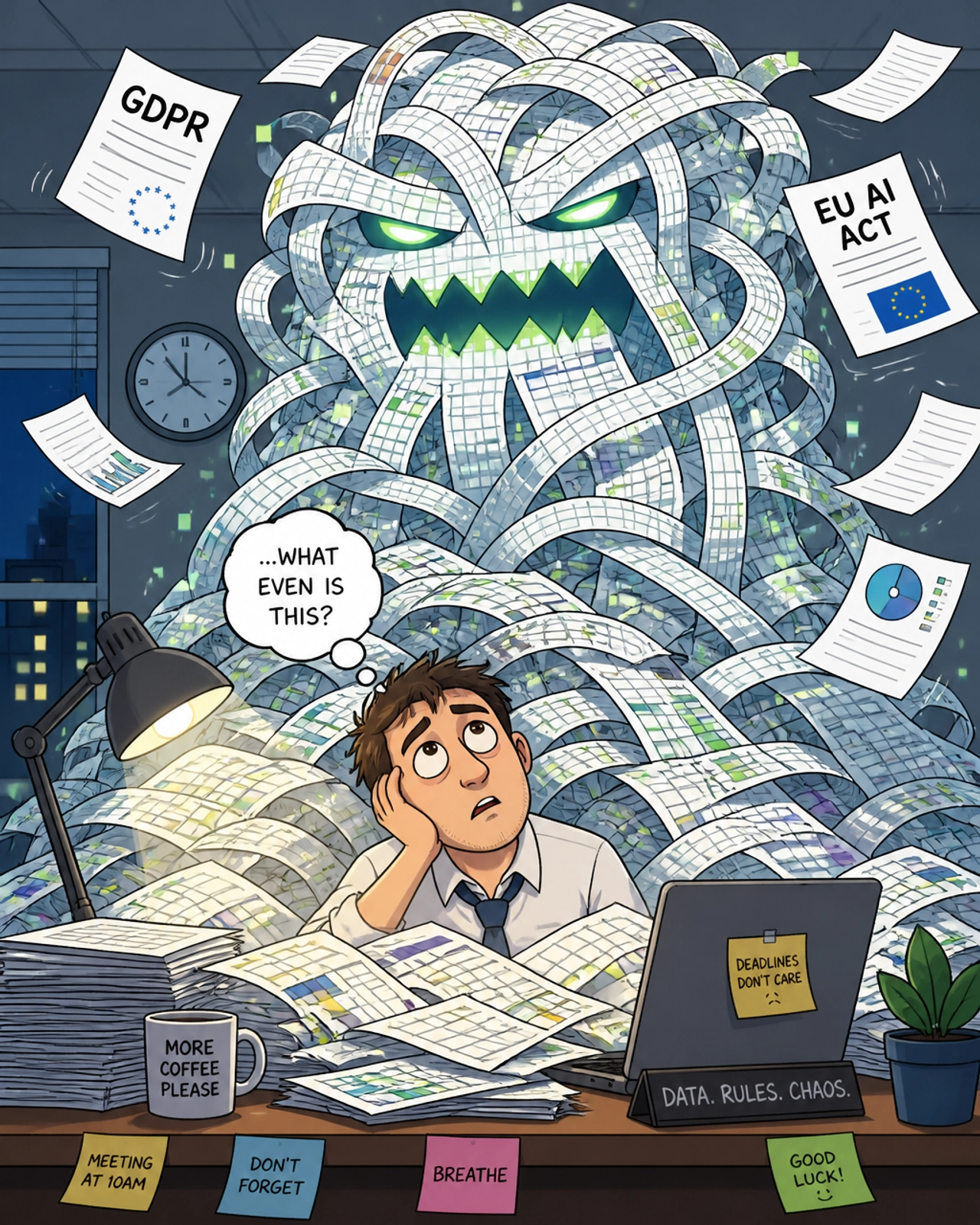
Compliance feels like a party pooper in a beige suit, but it doesn't have to be a headache. CloudMount turns regulatory nightmares into a breeze with automated scanning and smart software, helping Irish firms stay safe and savvy.
Make compliance useful rather than theatrical
Compliance can feel like another layer of administration between a busy team and useful technology. The answer is not to pretend the rules are effortless. It is to organise the work around real decisions: which tools people may use, what information they may share and who checks outputs before those outputs affect somebody else.
CloudMount uses automated scanning and smart software to support that work. A useful programme also needs accountable people, appropriate legal analysis and clear working instructions; no tool guarantees compliance on its own.
Start with a manageable inventory
Ask each team to identify its AI-enabled tools and explain the jobs they perform. Include embedded features in familiar applications, not just standalone chatbots. Record the owner, purpose, information inputs, supplier and intended audience for outputs.
Prioritise uses involving confidential material, personal data or decisions that could significantly affect people. Give staff a straightforward way to disclose experiments without making concealment seem like the easier option.
Separate AI Act and GDPR obligations
Under the AI Act, examine the system’s intended purpose, the organisation’s role and any applicable prohibition, high-risk requirement or transparency duty. Article 4 also requires providers and deployers to take measures towards sufficient AI literacy for relevant staff and other operators.
Where personal data is involved, GDPR requires its own assessment. Consider a lawful basis, fairness, transparency, data minimisation, security and retention. Determine whether a data protection impact assessment is required under Article 35.
Use automation for evidence, not reassurance
Automated checks can help surface issues for investigation, but the value of any finding depends on coverage, configuration and interpretation. Ask what a proposed scan can observe and what it cannot. Do not infer that an activity is safe simply because a dashboard has not flagged it.
For every significant finding, assign someone to verify the context, decide on an action and record the outcome. Retain a route for staff to report concerns that software misses.
Build a routine that survives a busy week
Create short guidance for common tasks and give teams examples of acceptable and unacceptable inputs. Explain when generated material needs factual checking, when specialist review is necessary and how to report a suspected incident.
Appoint an owner for the inventory and review it when suppliers, purposes or features change. The aim is not a perfect-looking folder: it is a business that can explain its decisions and respond when something goes wrong.
Sources and further reading
General information only, not legal advice. Regulatory obligations depend on your role, context and the provisions in force.
Want to talk about your compliance?
Book a review